Posts Tagged ‘dr. cate shanahan’

The Podcast about Autism, the Brain, and Infant Formula…

May 9th, 2012

by Sean Croxton

I couldn’t imagine having a child with autism.

Just the thought of it gives me a bit of anxiety — the unpredictable behavior, the tantrums, the head-banging.

If I had it my way, I’d have two kids — a boy and a girl. But knowing that — according to the latest figures — one in 54 boys is affected by autism, kinda scares the bejesus out of me.

It should scare the heck out of you, too. Because even if autism does not impact you directly right now, you’re not human if the statistics don’t make you wonder what the heck is going on here. Statistics like…

* One in 88 children are diagnosed with autism by age 8.

* The rate of autism increased 23% between the years 2006 and 2008. (I wonder what the 2012 numbers are!)

* Autism has increased 1000% in the past 40 years.

To give you more understanding as to the magnitude of this issue, the rate of obesity has increased 300% in the past 30 years. Again, autism is up 1000% in the past 40.

We have an epidemic on our hands, folks.

Unfortunately, although the rapid proliferation of autism may very well be one of the most pressing health issues of our time, the national conversation has taken on the tone of a whisper rather than the bullhorn it deserves.

Maybe this has to do with the fact that there is no poster child for autism, as last Thursday’s UW Radio guest Dr. Cate Shanahan suggests.

Then again, it could have to do with the fact that it is such a frustrating and emotionally charged issue — for both parents and researchers — that any discourse on the subject leads to very little progress, just bickering and ad hominem attacks, as exemplified by the vitriolic emails I receive in my inbox EVERY SINGLE TIME I do a show on the topic.

I don’t have the answers on autism. I admittedly haven’t spent a ton of time studying it. All I do is interview those who do — those selfless individuals who spend their free time scouring the research in hopes of uncovering another critical piece of what seems like a very large puzzle. The ones who have the courage to share their findings with the 30,000 people who listen to my show.

But since it seems like sooooooo many people want to know, my take on autism is this…

I really have no idea what the heck causes autism. If I did, I promise you’d be the first to know. What I do know is that at no point in the history of the world have people eaten such shit (pardon my French) and experienced such shitty health, while at the same time expecting to produce healthy offspring.

Can you tell how much this bothers me? If you want to know how I really feel, read the Mindless Procreation blogs I posted last year.

Before now, when has a pregnant woman eaten low-fat processed food throughout her entire pregnancy and expected to make up for her nutritional shortcomings with her prenatal vitamin?

When has a man expected to make a healthy baby out of his sugar-drunk sperm?

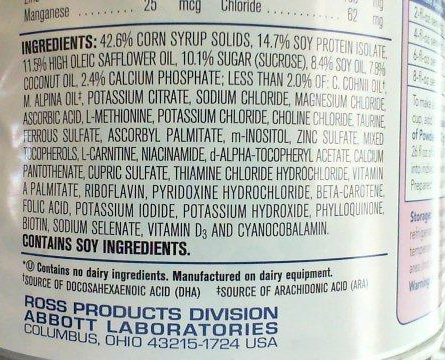
And when the eff did it become acceptable to build a baby’s BRAIN with infant formula made out of hydrolyzed soy protein (which contains neurotoxic MSG), vegetable oils (half of which are toxic trans fats), and corn syrup solids?

Like the rappers say, “What part of the game is this?”

As adults get sicker due to their increasing state of malnourishment, children seem to get more autistic.

No, I’m not suggesting any causal relationship between autism and the fact that our dietary guidelines — and actual real-life diets for 90% of the country — lack the nutrients to build a healthy newborn brain. Nope, not me. That would be, uh, quackery.

These are just my observations. No science. Just my thoughts.

If you want science, listen to people to like Dr. Shanahan, who on this episode discusses matters of autism including…

* How MRI technology is finding that the gray and white matter in the brains of autistic children differs from that of normally developing children.

* How excess white matter and insufficient gray matter in the autistic brain may be the cause of sensory overload often experienced by autistic kids.

* What diffusion tensor imaging has found regarding faulty connections in the autistic brain.

* How the raw ingredients for proper development of the gray and white matter are often missing from the adult and infant diet. No bricks. No brick house.

* The startling research showing that regressive autism occurs TWELVE times more often in formula-fed infants whose formula has insufficient long-chain fatty acids for brain building, as compared to breastfed infants.

* Dr. Cate’s interesting take on the gluten-free, casein-free diet.

* A hidden source of aluminum commonly found in the infant diet.

Click the PLAY button below to listen to the show in its entirety. Or watch the video clip for a teaser.

Thanks for putting up with my foul language!

Out.

Sean
One Lucky Similac Baby

How to Make Beef Bone Broth!

March 17th, 2011

I love my life!

If you’ve been reading my blog the past few months, you know that I’m a huge fan of the book Deep Nutrition: Why Your Genes Need Traditional Foods by Dr. Cate and Luke Shanahan.

I liked it so much that the Shanahans came all the way to San Diego to hang out and show me how to make Brown Beef Stock.

The stock is loaded with glycosaminoglycans, which are phenomenal for healing and building up collagen. If you have aches and pains, you gotta prepare this recipe!

I had Luke send over a list of the ingredients, as well as the instructions. Check them out below and watch the step-by-step video we put together.

Let us know how yours turns out!


Ingredients:

* grass fed soup bones and a joint bone (knee or other joint) w/ some meat on them (2-3 lbs)
* 2 12 oz. cans of tomato puree
* 1 small can tomato puree
* celery, 6 stalks
* onions, 2-3
* carrots, 5 medium-large
* fresh parsley
* bay leaves
* fresh thyme
* black peppercorns
* 2 or 3 cloves
* red wine, nothing labeled “cooking wine,” inexpensive but drinkable
* sea salt
* olive oil
* flour, 1 tbsp
* cold, filtered water, about 3 gal

Directions:

Step 1) Lightly coat bones and meat trimmings with olive oil. Then rub tablespoon of tomato paste mixed with one tablespoon flour onto bones and roast alone in a large roasting pan for 30-40 mins at 400 f., or an hour at 350 f.

Step 2) Add lightly (olive) oiled mirepoix (rough cut onions, carrots, and celery) and continue roasting for another half hour (check color; caramelize, but don’t burn).

Step 4) Add the bones only to a large stock pot. Put the roasted vegetables aside and refrigerate. Add a cup of red wine, half a can of the tomato puree and enough cold water to cover bones plus one inch.

Step 5) Deglaze the hot roasting pan by pouring in some red wine or water to remove the nice caramelized drippings. (If you have the kind of pot you can put on the stovetop, you can get it a little hotter this way to aid deglazing.) Add this rich liquid (called “fond”) to the stock pot. That’s extra flavor!

Step 5) Heat stock at medium heat, stirring every few minutes and watching closely. Bring to a low, low simmer–but NEVER BOIL with the bones in the stock (as this extracts bitter proteins and clouds the finished stock).

Step 6) Low boil or steep at around 200 f. (just short of making boiling bubbles) for 12-24 hours, no more, no less. You can leave uncovered or partially covered. But never cover (as in seal, with no way for steam to escape) your stock when hot as doing so “sours” the stock. Every once in a while, use a slotted spoon to remove any scum that forms at the top of the liquid. That scum can make the stock bitter, so remove it every half an hour for the first few hours.

Step 7) For the last hour (or two) of low simmer, add those roasted veggies you put in the refrigerator. Throw the bay leaves and cloves in when you add the veggies. If your a fan of tomato (as I am), add another 12 ounce. can of tomato puree at this time if you’d like.

Step 8. For the last half an hour of the low simmer, toss in the fresh parsley (plenty, as in the full bunch) thyme (half as much as the parsley) and a flat tablespoon of peppercorns. (If you only have dry spices, you can steep them in the stock using one of those big tea balls, dangling it from the side of the pot by the chain a full hour before you take the stock off the heat.)

Step 9) Remove the dry herbs tea ball, if that’s what you used. Let the stock cool for a while on a cooling rack, until it’s cool enough to handle and strain. Strain through a fine wife mesh strainer into another big pot. (The bones are big and heavy, so you might want to remove those with big tongs or a solid slotted spoon before straining.) You can also use cheesecloth to strain, as Sean did so expertly when straining his chicken stock.

Step 10) Once the stock’s in the other pot, chill in an ice bath in the sink. Stir both the stock and the ice water to cool quickly. Once it’s at room temperature, put the stock into the refrigerator to chill.

Step 11) After it chills overnight, you’ll notice that the stock has formed a cap of fat on top. This can be as much as an inch thick. Remove this by cutting into quadrants with a knife and gently lifting it off of the gelatinous stock.

Step 12) If you like, reduce the stock by up to a half. Season with a little sea salt, but keep in mind that the more you further reduce, the saltier it will get–so under-season! You can always add more salt later. Now warm the stock for a couple minutes on the stove to make it easier to pour, and pour into little plastic or glass containers and store in the freezer for up to several months. I use painter’s tape to label the date of the stock, and the type of stock. Just remember to leave a little room to allow the freezing liquid to expand. Enjoy!

Sean
www.undergroundwellness.com
Protandim