Posts Tagged ‘saturated fat’

I Heart Coconut Oil!
April 19th, 2011

by Sean Croxton

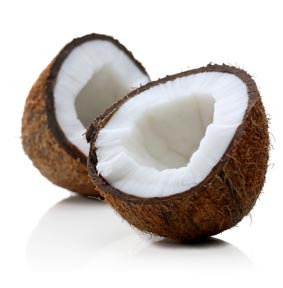
It’s the coconut oil, baby!

Last year, I lubed up my head and face, got my keyboard all sticky, and posted one of the most infamous videos ever made on the benefits of coconut oil. I think I’ve gotten more email about coconut oil than just about any other topic I’ve vlogged about.

The video was so popular that one night I was standing in front of a gay nightclub in San Francisco (don’t ask!) and a man asked me, “Hey, aren’t you that coconut oil guy?”

Yeah, that’s me.

Typical coconut queries revolve around weight loss and its ability to boost metabolism. But there is so much more to it!

So, today I thought I’d pay homage by starting a series of blogs on the oil that I dare not live without. Even if you’re the most steadfast saturated fat phobe, I guarantee that after reading this series you’ll have at least one coconut-oil-stained shirt in no time.

I’ve got a bunch.

I’m thinking five blogs will be enough to do the job. Then we’ll cap it all off with next week’s UW Radio show (Thursday, April 28) with Bruce Fife, author of The Coconut Oil Miracle. Should be a pretty dope show!

We’ll start our series with a short discussion on heart disease. It seems as though every time I introduce coconut oil to friends and family, they go on and on about how it’s loaded with saturated fat and how it will crank up their cholesterol levels and make their hearts stop.

Where did this fear of the coconut originate? Well, let’s take a trip back in time.

Back in the 80s, when saturated fat was put on full-blown leper status for its link to cholesterol and heart disease, the American Soybean Association went on a public relations blitz to oust all tropical oils from our diets and replace them with their multi-billion dollar cash cow, otherwise known as “heart-healthy” vegetable oils.

Never mind the fact that generations of tropical people had consumed tons of coconut oil while showing no evidence of heart disease. Nope, those folks must have been exempt from the lipid hypothesis. Coconut oil only targeted American arteries.

But even if cholesterol were the evil terrorist it was made out to be, coconut oil wouldn’t have had any effect on it anyway.

Yes, coconut oil is very high in saturated fat. But that’s a good thing. There are many different types of saturated fats. Some are long. Some are short. Coconut oil is somewhere in between, as it is composed primarily of medium-chain fatty acids (MCFAs).

Where the soybean industry dropped the ball was its convenient neglect of the fact that MCFAs are burned immediately for energy. They’re not stored as fat. Nor are they converted to blood cholesterol. So even if elevated cholesterol did have anything to do with heart disease, coconut oil certainly was not the culprit.

In fact, the polyunsaturated vegetable oils the industry was pushing as a replacement were far more dangerous. I’m trying to keep this blog short (never happens), but the more unsaturated an oil is, the more prone it is to oxidation.

Coconut oil is super-saturated and chemically stable, making it less vulnerable to oxidation and all of the health dangers that go with it. It even remains stable under high heat, making it the preferred oil for cooking.

There are three things that cause unsaturated oils to oxidize or go rancid: heat, light, and exposure to oxygen. Remember that the next time you fry your chicken in that vegetable oil you keep on the kitchen counter in a clear plastic bottle.

According to Fife, “all conventionally processed and refined oils are rancid (oxidized) to some extent by the time they reach the store.” Most of time, you can’t even tell if the oil you bought is rancid or not since the smell and taste may not change.

And cooking with these oils just makes a bad situation even worse by creating toxic trans fats, which cause all kinds of cellular dysfunctions including many cancers and yes, heart disease!

Oxidized oils generate a tremendous amount of free radicals in the body. These free radicals can damage your DNA, cellular organelles, enzymes, and cell membranes. No bueno. They can also damage your arteries, creating a cascade of events that eventually lead to atherosclerosis, or hardening of the arteries.

In other words, we replaced a supposedly artery-clogging oil with a really artery-clogging oil!

Sheesh. You can’t make this stuff up!

See you in a couple days. We’ll talk about how coconut oil actually boosts the immune system and is one of the few foods that can battle bacteria, viruses, parasites, and fungus. The stuff is just incredible.

Time to head over to David Getoff’s home to film Episode 4 of the Underground Wellness Show.

Looking forward to reading and replying to your comments. You can also TWEET ME at @ugwellness.

Sean
www.undergroundwellness.com
Protandim

Is Your Low-Fat Diet Making You Depressed & Anxious?

February 4th, 2011

Fat makes me happy.

If you haven’t noticed, the low-fat era has not only coincided with a tremendous surge in obesity and diabetes, but also depression, anxiety, and addiction.

Seldom do we consider that the root cause of our mood issues is literally on our plates.

Or NOT on our plates.

On Monday, I blogged about the fact that 99.99% of our genes were formed before the Agricultural Revolution (just 10,000 years ago). Despite advancements in technology and our personal opinions regarding what we should be eating, we’re still genetically hardwired like hunter-gatherers.

We are hunter-gatherers.

Although we have no written or eyewitness accounts of the mental and emotional state of cavemen and women, we can look at the works of Weston A. Price and Vilhjalmur Stefansson, PhD to draw some conclusions as to the role of diet in mental health. In the case of Stefansson, a Canadian explorer and anthropologist, the Eskimos he studied and lived with were “the happiest people in the world”. Not only were they happy, but they were also extremely healthy, free of cancer, heart disease, and the diseases of civilization.

The Eskimo diet consisted of 80% animal fat. In fact, they warned Stefansson of the dangers of eating lean meat. They said it would make him sick, just as it making us sick.

I have long believed that in order to be healthy and happy, we must do as healthy and happy people do. Weston Price found that the native people he studied and lived with consumed ten times more fat-soluble vitamins and four times more minerals than we consume. These primitive people had no need for jails or mental institutions. Similar to Stefansson, Price consistently found that with adequate fats and nutrients came not only superior health, but also a pleasing, cheerful disposition.

We can learn a lot from “primitives”.

Regardless of how many self-help books we read, antidepressants we take, or talk therapy sessions we pay for, none will restore a nutritional deficiency.

According to last night’s UW Radio guest Pam Killeen, author of Addiction: The Hidden Epidemic,

“Approximately 60% of our brain is made up of fat. About 25% of the fat is the omega-3 fatty acid DHA, while 14% is the omega-6 fatty acid arachidonic acid (AA).”

CLICK HERE to listen to Pam Killeen on UW Radio!

The ideal food sources for these critical fats are wild fish, shellfish, grass-fed meat, lamb, goat, and pastured poultry and eggs. Yet, we prefer farmed fish, grain-fed cattle, the skin removed from our chicken, and the yolks out of our eggs. That is, if you eat animal foods at all.

We make grand attempts to keep our cholesterol levels down to save us from heart disease, yet we ignore the fact that “our brains make up 2% of our body’s weight and contains 25% of its cholesterol”. In fact, “myelin, which covers nerve axons to help conduct the electrical impulses that make movement, sensation, thinking, learning, and memory possible, is over 1/5 cholesterol by weight”. Cholesterol also increases neurotransmitter function five-fold and is needed for the proper functioning of serotonin (the happy neurotransmitter) receptors in the brain. Low cholesterol will not save you from heart disease and it will certainly have a negative impact on your mood and brain function.

I can go on and on about mineral deficiencies, specifically zinc, which is very low in plant foods, causing an imbalance with copper. An imbalanced zinc-to-copper ratio can cause fatigue, anxiety, hyperactivity and more. The best sources of zinc are red meat, organ meats (yum!), seafood, and oysters (I’m eating some right now).

Vitamin D, which is ONLY present in animal foods, is necessary for the conversion of the amino acid tryptophan into serotonin, as well as the conversion of tyrosine into dopamine and norepinephrine. Yes, you can get Vitamin D from the sun. But how many minutes have you spent in the sun today?

These are but a few of the nutrients that were abundant in the primitive’s diet and which are certainly lacking in our low-fat, high-carb fare. We have never in the history of the world consumed a diet this low in saturated fats, fat-soluble vitamins, and minerals. We’re paying the price for it, not only physically but mentally.

We do not have an antidepressant deficiency! Rather, many of us are deficient in the nutrients that build healthy brains and neurotransmitter function.

Like I always say, you can’t build a brick house out of wood.

Wood seems to be all we’re working with.

Depressing. Literally.

Source:

Sean Croxton
Currently Munching on Oysters!
http://www.undergroundwellness.com
Protandim

Get Cultured E-Course