Posts Tagged ‘raw milk’
Under the Microscope: Raw versus Pasteurized Milk
December 9th, 2010
by Sean Croxton
Originally posted at www.thedietsolution.co.uk
Meet Charles North.
A smooth talker and astute businessman, Mr. North forever altered more than 40,000 years of nutritional wisdom with a new invention and a little fear. The year was 1907, a time when milk was mostly produced by happy grass-fed cows and rightfully consumed in its raw form. With his newly invented batch-processing pasteurization machine in tow, North made it is own personal mission to rid the country of raw milk-induced disease.
The problem was that there was no raw milk disease epidemic. Yet, that did not stop the inventor from traveling through small towns alerting the people of an outbreak of illness in the previous town he had visited. Drinking unpasteurized milk caused the illness. The solution was his machine. The story was fictional.
To the naked eye, milk treated by North’s machine did not appear much different from its raw predecessor. And to the fearful mind, it was safer to consume.
More fiction. Let us take a closer look.
The Grand Designer engineered raw milk with a vital microstructure intended to provide nourishment and to complement proper digestive function. Milk’s structure consists of somewhat of a separation of powers. Its protein and fat components are meant to function independently with little to no interaction. In her book Deep Nutrition: Why Your Genes Need Traditional Food, Cate Shanahan M.D. takes us under the electron microscope to show us a side of milk seldom seen.
“…we can see the casein micelles, which are amazingly complex. Imagine a mound of spaghetti and meatballs formed into a big round ball. The strands of spaghetti are made of protein (casein), and the meatballs are made of the most digestible form of calcium phosphate, which holds the spaghetti strands together in a clump with its tiny magnetic charge. This clumping prevents sugar from reacting with and destroying milk’s essential amino acids.”
Dr. Shanahan goes on to describe the fat globules, each one unique in size and enclosed in their own phospholipid membranes. These membranes are home to various specialized proteins that protect the globule from bacterial infection. Other proteins act like special transit passes, signaling the intestines to absorb the globules without inspection. This feature allows for effortless fat digestion without the assistance of the gallbladder. As long as the fat remains disconnected from the aforementioned casein and calcium, everything runs smoothly. When the components get too close for comfort, it can be a bumpy ride.
After the heat and strain of pasteurization and homogenization, the organized world that was raw milk comes to resemble a war zone. The population of beneficial bacteria that once protected the milk (as well as its consumer) from infection is wiped off the map. The utilitarian structures of the fat globules are destroyed as the homogenization process forces them through microscopic holes. The transit passes that allowed for easy digestion go missing. This slows the digestive process, thus the myriad of digestive disturbances experienced upon consumption of pasteurized milk including gas, bloating, and constipation.
“Processing can render milk highly irritating to the intestinal tract, and such a wide variety of chemical changes may occur that processed milk can lead to diarrhea and constipation. During processing, the nice, soft meatball of colloidal calcium phosphate fuses with the fatty acids to form a kind of milk-fat soap. This reaction, called saponification, irritates many people’s GI tracts and makes the calcium and phosphate much less bioavailable and more difficult to absorb. Processed milks contain anywhere from one-half to one-sixth the bioavailable minerals of the fresh products.”
The heat of pasteurization also denatures amino acids. These damaged proteins remain in the milk where they can become toxic, allergenic, and inflammatory. And if that were not enough, an enzyme called xanthine oxidase can hide within the fat globules, passing intact through the intestinal barrier and into circulation. This is not supposed to happen. In its unpasteurized form, xanthine oxidase is broken down and rendered inactive by the digestive process. When it passes intact into circulation it wreaks havoc on our arteries causing atherosclerosis, as well as free radical damage. Ouch.
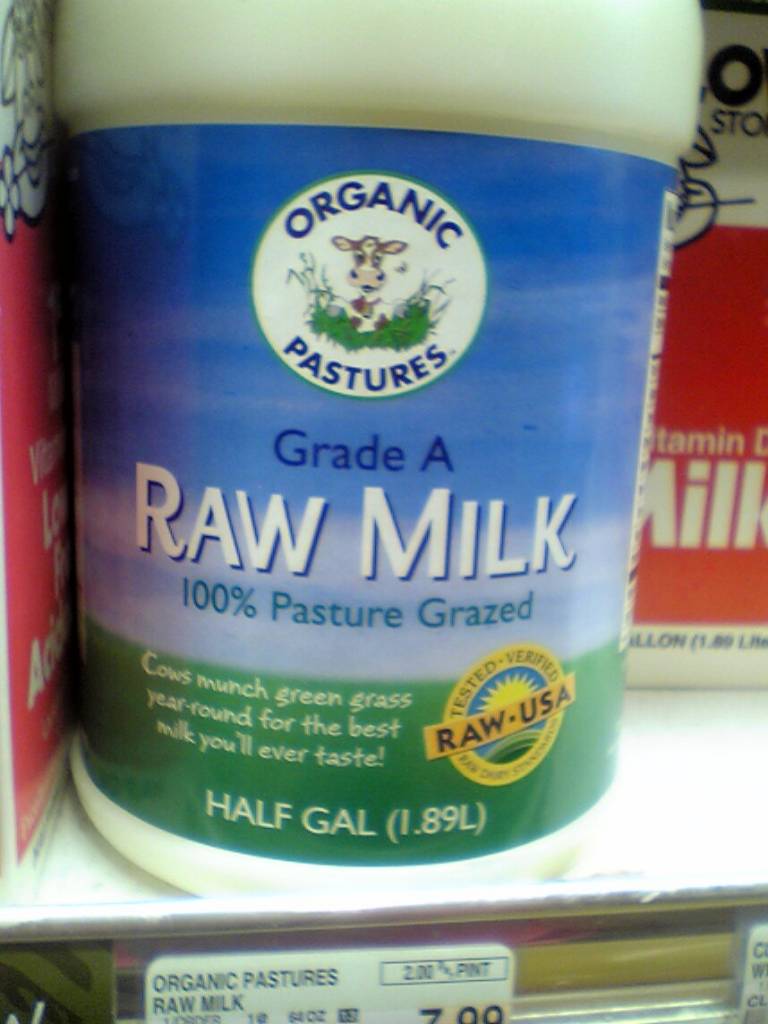
Times have changed. And so has our milk. Raw milk was once adorned for its nourishing, immune-building, disease-protective benefits by people the world over. Now it is feared. But what is to be feared is its pasteurized, homogenized, so-called “safer” alternative; a lifeless source of digestive dysfunction, damaged proteins and fats, inferior nutritional value, and clogged arteries. Not to mention the sick cows from which it comes.
One hundred years later, Charles North’s story is still being told. Despite the fact than no outbreak of illness has ever been attributed to raw milk from grass-fed cows, we remain steadfast in our willingness to trade a milk product that causes imaginary illness for one that actually contributes to poor health.
Mr. North would be proud.
Source: Deep Nutrion: Why Your Genes Need Traditional Food by Catherine Shanahan, M.D.
Sean Croxton
Underground Wellness
www.undergroundwellness.com

Lactose Intolerance: It Did My Body Good!
November 11th, 2010
by Sean Croxton
What I Learned Today #2
Currently Reading – Deep Nutrition: Why Your Genes Need Traditional Food
Milk and I have never been friends. Pasteurized milk, that is.
Even the tiniest glass of the white stuff is certain to give me a case of the bubble guts.
Caution: Highly Flammable
Growing up in a predominantly White community, I was intrigued by what pleasure my friends took in downing multiple cartons of the chocolate cow juice with no ill effects. I was perplexed and confused by milk’s inherent bias toward those with lighter skin; doing their bodies good while making mine feel so bad. Who knew a beverage could be so discriminative?
It just wasn’t fair. I wanted a milk moustache, too! I wanted strong bones and teeth. Just because my skin was darker didn’t mean that I needed less calcium than they did!
On occasion, I would just grit my teeth and bear it. But with each spiteful glass of dairy, the outcome never changed. I was doomed. Milk had failed me.

Fortunately, I came to find out that it wasn’t just me. In fact, most Black folks are lactose intolerant. According to Wikipedia, lactose intolerance is as low as 5% in Northern Europe, from where many of my childhood friends had descended. Yet in countries like Asia and Africa, rates can go higher than 90%.
Of course, I figured there was a genetic component to all of this. That’s obvious. But why the geographic polarity?
Today, I stumbled upon the answer while reading Deep Nutrition: Why Your Genes Need Traditional Food by Catherine Shanahan MD.
Just about all of us are born with the critical digestive enzyme lactase. When we were babies, we depended upon lactase to digest the dominant milk sugar lactose. As we grew older and weaned off of Mom’s breast, many of us lost this enzyme. But contrary to what some so strongly believe, this was never a sign that we should not consume milk from other animals. Humans have been consuming milk for over 40,000 years. If weren’t supposed to drink it, I think we would have figured that out by now.
Our ancestors consumed real milk. They never pasteurized or homogenized it. They never discarded the thick layer of brain-building cream. Nor did they feed grains, hormones, and antibiotics to their precious cattle. We do.
What I did not know about lactose intolerance was what Dr. Shanahan described on pages 155-156 regarding the impact of geographic climate on the composition and digestibility of milk. It is the process of fermentation that breaks down lactose, which is why the lactose intolerants among us don’t have issues with cheeses and yogurt. The lactase enzyme is not required.
Interestingly, fermentation occurs more rapidly in warmer climates. Therefore, my sun-dwelling African ancestors had very little need for the lactase enzyme after weaning. What we don’t use, we eventually lose as our genes flip our lactase switches to their “off” positions. In colder climates such as Northern Europe, fermentation occurred more slowly, leaving milk fresh for days. Due to their frequent exposure to lactose-containing dairy, the lactase genes stayed switched on.
Mystery solved.
Pasteurized milk and I were never meant to be friends. In hindsight, I am extremely thankful to my ancestors for wiring my genes to avoid the pus-laden bovine nectar. Without my lactose intolerance, I would have never discovered the value of real raw milk from pastured cows, the milk that we were meant to consume.
For every loss, there is a gain. I lost my lactase enzyme and gained substantial health because of it. But we’ll have to discuss raw milk on another day. Gotta finish this book! Can’t wait to get my hands on The China Study. It’s up next.
I wonder what I’ll learn.
Sean Croxton
I Like to Read and Stuff
www.undergroundwellness.com
www.youtube.com/undergroundwellness
www.blogtalkradio.com/undergroundwellness
www.twitter.com/ugwellness