It goes without saying that I’m a HUGE fan of the paleo diet.
Though I don’t call myself “paleo” — I prefer to say that I just eat real food — I think a diet and lifestyle based on ancestral living makes a whole lot of sense.
And judging by the lean physiques and energetic presence of last week’s Paleo FX presenters and attendees, eating and living this way definitely works…
But not all of the time.
If I had to guess, I would say that for every one person who has tasted success with paleo (it tastes like bacon, by the way), there are at least ten who have failed.
And that’s because following a paleo diet means you have to follow a paleo diet.
Unfortunately, it’s not so easy a caveman can do it.
The honest truth is that, for most people, going paleo isn’t just a matter of reading the latest paleo book and dropping the grains, legumes, and dairy.
As with any change in behavior — in this case, diet and lifestyle — a concurrent shift in perspective must take place, without which the change is sure to be short-lived.
Or as this week’s UW YouTube guest and author of The Paleo Coach Jason Seib says, you’ll soon find yourself doing your second or third 30-day paleo challenge.
This is the difference between those who succeed with paleo and those who do not.
Of course, you need the nuts and bolts — food lists, recipes, workouts — and know-how to get started with your paleo lifestyle.
However, it is a shift in mindset that ensures that you stick with it.
In the video below, Jason and I discuss the missing psychological piece of the paleo puzzle.
You’ll learn….
* why focusing on appearance alone won’t get you very far
* why intrinsic motivation is the key to long-term success
* the pitfalls of implementing too much paleo too soon
Check it out and leave a comment with your thoughts!
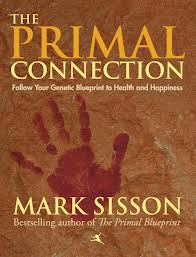
That’s exactly what went through my head when I heard that Mark Sisson had a new book on the way.
In my opinion, the last thing the world needs right now is yet another Paleo book recommending that we eat real food and remove grains and dairy from our diets.
I think I’ve read that book about 15 times — with 15 different authors and titles — in the past year or so.
Besides, Mark did an outstanding job teaching us what to eat in The Primal Blueprint. What more could he have to offer in his latest opus The Primal Connection?
The answer is quite a bit. In fact, The Primal Connection has little, if anything, to do with diet. It’s about all of that other stuff.
That other stuff has become one of my favorite topics these days. Yes, we know that our dietary choices can have a dramatic impact on gene expression, switching the good (or bad) genes on or off. But it doesn’t end there.
Environmental factors — social interactions, sunlight exposure, our inner dialogue, and even laughter — can have just as profound an effect on our genes as what we stuff into our mouths. I’ll give you a few examples:
Did you know that laughter turns on the genes that fire up your immune system by increasing production of NK (natural killer) cells responsible for defending against cancers, infections, and other bugs?
I remember learning in my CHEK Holistic Lifestyle Coaching course that the average person chuckles just once a day. A chuckle. That’s not even a full-blown laugh!
Did you know that simply being touched can turn on the gene that controls the receptor for the stress hormone cortisol, thus reducing its effects?
These days, being touched brings to mind allegations of sexual harassment more than its potential to mitigate the effects of stress.
Or, did you know that your genes expect you to spend time in nature? The sights, sounds, and smells are all hardwired into your DNA. In fact, the Japanese are finding tremendous hormonal and cellular benefits as a result of what they call “forest therapy”.
When was the last time you got “nature-fied” — a hike, a climb, a dip in the ocean?
These are but a few examples of how your overall health is determined in large part by what you do in between meals and workouts. We are meant to laugh, play, touch, love, socialize, sleep, get dirty, relax, and even get an adrenaline rush here and there.
Your diet may be amazing, but are you feeding your genes everything else they expect?
Are your truly living?
Last night, Mark and I spent an hour chatting about everything non-food related on UW Radio. My favorite part was our discussion of his Ten Habits of Highly Effective Hunter-Gatherers…
#1. Take responsibility
#2. Be selfish
#3. Build a tribe
#4. Be present
#5. Be curious
#6. Trust your gut
#7. Pick your battles
#8. Get over it
#9. Sharpen your spear
#10 Be affluent
Click the video below to listen to a short clip on Taking Responsibility and Being Selfish. Or click the mini-player to listen to the entire episode.
With so much emphasis these days on Paleo, low-carb, and low-glycemic, confusion abound over the role of starch in the human diet.
I prefer to keep it simple and recommend that we eat like our ancestors.
But were our ancestors starch eaters?
Last week’s UW Radio guest Paul Jaminet seems to think so. And in the latest edition of his book Perfect Health Diet he outlines the scientific evidence supporting this premise, including…
* isotope signatures of fossilized bone
* the structure of hominid teeth
* the diets of modern hunter-gatherers
* genetics
Check out this quick clip from our show to hear Paul explain how our ancestors lived in open grasslands, and what it had to do with their starch consumption.
Anyone who can take books like Rework (about streamlining success and increasing productivity for entrepreneurs and small businesses), Good to Great (about how companies achieve enduring greatness), and Against All Odds (the autobiography of James Dyson, the inventor of the Dyson vacuum) and apply them to fat loss and personal transformation is my kind of guy.
Heck yeah it was good! Rarely do I ever read a book straight through. But when Dean shared the epiphany he had after 25 years of eating “healthy” while still carrying around an extra 50 pounds of body fat, I was hooked.
In Dean’s words…
“There was no reason to believe that this time around would be different, and yet I couldn’t shake the feeling that I was onto something this time because my epiphany focused not on how to lose weight, but rather on how to think about weight-loss. Twenty-five years of doing “stuff” hadn’t worked. This time I needed to be different, and in order for me to be different, I needed to think different.”
Word up, Mr. Dean.
How many years have you been fighting the battle?
How many diets have you tried with only temporary success — or none at all?
If you’ve been on the fat loss train since the Clinton administration, deboarding at every dietary stop — South Beach City, Atkinsville, Low-Fat Francisco — but you’ve got no souvenirs to show for it, it might be time to ponder what the common denominator is in all of this…
YOU!
As I touched on in THIS BLOG, faulty thinking is often the root cause of failed attempts at fat loss and lifestyle modification. To review…
Thoughts determine our feelings.
Feelings determine our actions.
Actions determine our results.
Dean’s epiphany to be different by thinking different was the impetus for the twenty shifts — defined as subtle changes in thinking that in turn allowed the subsequent shift to come more easily, until the accumulation of shifts resulted in a complete mental overhaul — outlined in his book.
As I wrote last week, one small success on top of another small success on top of yet another small success eventually becomes one BIG success.
Speaking of success, Dean has managed to subtly shift his protruding late-forty-something-year-old white belly (his words, not mine) into a set of six-pack abs.
That’s a lot less carrots, Mr. Dwyer! (You’ll get that joke once you read the book.)
So…are YOU ready to make some shi(f)t happen?
I hope so, because today I’m going to share a handful of shifts and advice from Dean’s book that you can put into action TODAY.
Let’s DO this shi(f)t!!!
DO What Fits. Sorry for repeating myself, but small shifts lead to what Dean calls seismic change. But if you’re on-the-go all hours of the day, a diet program that requires you to cook every meal from scratch just ain’t gonna work. It doesn’t fit into the context of your life! Instead, do some Googling to see if there is a ready-to-eat healthy meal store like Fitzee Foods nearby that you can stop by to pick up your meals for the week.
Or if your latest fat loss regimen requires that you do an hour a day on the treadmill plus weights, how long do you think you’ll be able to stick with it? That doesn’t fit either! Like Dean says, if you don’t see yourself doing it five years from now, it’s definitely not for you.
Instead, you can work out at home for 30 minutes most days of the week using just your body weight and minimal equipment. No travel time. No gym dues. No awkward locker room moments. And no ridiculous fantasies of doing things that you simply don’t have time for.
If it doesn’t fit, it’s not going to stick!
Ignore Most (But Not All) Experts. Most fat loss and health gurus out there don’t know shi(f)t! What they know is what worked for them, lacking any and all awareness of the FACT that there are different solutions for different people. As Dean points out, be on the lookout for experts who focus on outcomes while omitting the details, ones who push products over principles, and those that make you dependent on their products and services.
This reminds me of when I was a personal trainer and the veterans would advise me to teach my clients just enough to make sure that they came back for more sessions. That never sat well with me. I’m a “teach a man (or woman) how to fish” kind of guy. This ain’t no seafood restaurant.
Become an Expert on YOU! I get a LOT of email from people asking me if I could tell them EXACTLY what to eat — how many grams of this and grams of that to throw down their pie hole. My answer is always this: I don’t know! Find out what works for you by keeping a diet log, tracking not only what you eat but also how you feel after each meal. There’s a really good one included in my e-book The Dark Side of Fat Loss.
Let. Me. Be. Clear. There is no one on the face of this Earth who can tell you exactly what foods you should eat and in what ratios you should be eating them. No one!
And this brings us to the next shift….
Think in Beta. I love this one since Dean snagged the idea from the aforementioned book Rework, which may have been the last book I read cover-to-cover in one sitting prior to Dean’s opus.
Here’s the deal — when a software program is in beta you expect there to be glitches and bugs. The developer uses this trial period to capture user feedback so that the functionality of the program may be improved upon. Once the bugs are worked out, an upgraded 2.0 version is released.
As Dean writes, we need to get our beta on! In other words, it would be unrealistic to expect ourselves to get this whole fat loss thing right the first time around. Necessity is the mother of all invention. What I mean is that in order to become the expert on YOU — to become the 2.0 version — you have to go through some trial-and-error first to find out where the glitches are. Once you figure out what you need, then you can create a solution for yourself. And the solution is probably not someone else’s program.
Didn’t I write about this last week?
If you’re walking on a path that’s already trodden, you know it’s not yours.
Experiment on yourself and work out the beta bugs. Be mindful of what’s working and what’s not. Again, log your meals. (No, you won’t have to do this forever.) Monitor your post-meal body language. What is your body saying to you? Manipulate your macronutrient ratios — the percentage of proteins, fats, and carbs. Keep an eye on your measurements and how your clothes fit.
Remember, you are a complex being, so getting your beta on can take weeks or even months. Even those geniuses over at Facebook seldom get it right the first time. Embrace the bugs in the system, recognizing that every tweak you make is but one more small success on the road to seismic change.
Identify System Problems. This one comes from another book I recently read (and loved) called Switch by Chip and Dan Heath, in which the authors introduce the concept of the Fundamental Attribution Error (FAE). Put simply…
People tend to ignore the situational forces that shape other people’s behavior, thus attributing it to the way they are rather than the situation they are in.
I can write an entire blog on this one (and probably will at some point), but for now let’s consider the following:
You say you can’t help but eat sweets before bed, but would this continue to be true if you didn’t keep sweets in the house?
You say you can’t keep your weight down because there are no healthy food options near your job, but what if you took your own lunch?
You say that you don’t get up at 6am to go to the gym because you’re too tired to deal with the hassle of getting ready, but what if you laid out your gym clothes the night before and left your alarm (the one on your phone, I assume) in your workout pants pocket?
You see, these aren’t really problems with YOU per se. Rather, these issues are guided by situation forces that can be very easily overcome by simple situational shifts.
The little things go a long way.
And that’s the point of Dean’s book — a little shift here on top of a little shift here on top of another little shift over there eventually leads to seismic change.
Dean is one of the few in the health blogosphere who has this thing figured out. It’s not just about food and fitness, you guys. You gotta get your mind right.
Read his book.
I guarantee it will make you shi(f)t your pants! Pun intended.
By the way, Dean was a presenter at my Paleo Summit. I posted his presentation below. I’ll leave it up for the rest of the week. Watch that shi(f)t!!!
I imagine it was my father who turned me on to him. At the time, I didn’t really understand his stand-up comedy routine — jokes about sex, women, and cocaine kinda go over a 6-year-old’s head, ya know.
I just remember my Mom covering my miniature-sized ears while he cursed up a storm on stage.
But that just made him cooler, Mom.
Off-stage and on the silver screen there was a lighter side to the potty-mouthed comic. The Toy — co-starring the great Jackie Gleason — is still one of my favorite movies. And who can forget his roles in Brewster’s Millions with John Candy, Superman III with Christopher Reeve, and the hilarious Hear No Evil, See No Evil with sidekick Gene Wilder.
I may have been 9-years-old when I first heard the bad news of Pryor’s diagnosis with multiple sclerosis (MS), a condition he battled for 17 years.
Like his comedy act, I was then too young to fully understand the outlook and implications of an MS diagnosis. It was not until I watched the movie Harlem Nights that it finally clicked.
Right away I knew that something wasn’t right with Richard. His speech was slightly slurred. His coordination seemed a bit off. His facial expressions weren’t the same ones I was used to.
He was deteriorating.
Over the next decade I would watch his condition progress further as he struggled through television interviews. Eventually, his wife did most of the talking for him.
The man who once strutted back and forth on stage had been confined to a wheelchair.
The man who made a living with his BIG mouth was rendered nearly speechless.
In 2005, he was gone.
The laughter had ended. MS is no joke.
The despair of the Richard Pryor story serves to magnify the incredibility of another.
Late last year, I learned of Dr. Terry Wahls and her miraculous recovery from MS. During her now-gone-viral TEDx talk, I was very happy to find out that the doctor’s recovery was not attributable to the latest technology or pharmacological research, but to Real Food.
Unwilling to live out the rest of her years from the confines of a tilt-reclined wheelchair, Dr. Wahls took it upon herself to scour the research on neurodegenerative diseases. What she found were 45 critical brain-building nutrients, most of which are deficient in the Standard American Diet.
As Dr. Wahls explained during our broadcast, the human body is a chemistry set requiring specific nutrients in order for reactions to occur and for structures to be built. Without these critical nutrients, the structures of the brain (as well as the many other systems of the body) are either made incorrectly or not made at all. Like I say, you can’t build a brick house without the bricks.
When at least two out of three people reading this blog are deficient in minerals, and one in two are deficient in the B vitamins as well as vitamins A and C, I think it’s fair to say that we are nation short on bricks, and knee-deep in chronic degenerative diseases as a result.
When the chemistry stops, we die. In the meantime, we deteriorate. That is, unless we add the right bricks back to our diets.
What’s exciting about Dr. Wahls’ story is the fact that the bricks she used to reverse her MS came by way of the Paleo Diet, as she removed grains, legumes, and dairy while maximizing the consumption of the 45 brain-building nutrients.
Never underestimate the power of Real Food.
In OUR PODCAST, Dr. Wahls covers a range of topics including…
* The different stages of MS
* Why greens, sulfur-containing foods, and colored veggies are critical for building a healthy brain and body
* The connection between starches, gut health, and autoimmune diseases like MS
* The importance of removing toxins from the body
* Why a supplement program is important but not a replacement for Real Food
* The doctor’s take on grains, gluten-free flours, and eggs
* Why the standard medical approach to MS will not change without published clinical trials
* What you can DO to support nutrition-oriented MS research by visiting The Wahls Foundation website
And best of all, you’ll learn why we should all take Benjamin Franklin’s advice and “Fart Proudly”.
MS never got the chance to take away Dr. Wahls’ ability to make us all laugh.
That’s right, our most popular UW Radio guest rocks the Room 1 stage today, as he tackles a range of topics including the failures of our educational system, why we must regain and follow our instincts, and the deification of doctors, scientists, and supposed health gurus.
I predict that most of you will want to watch this one twice!
Over in Room 2, Dallas & Melissa Hartwig of Whole 9 Life cover how vegans and vegetarians can integrate
Paleo principles into their diets and lifestyles.
No, they won’t try to convince vegans/vegetarians to eat meat!
Lots of great info in this one on sustainable eating, supplementation, and the proper preparation of grains
and legumes.
And, of course, we can’t go a whole week without talking about poop!
In Room 3, Dr. Allison Siebecker teaches us how to troubleshoot common digestive complaints that may occur when switching to a Paleo diet. This one is awesome!
Coincidentally, two of today’s presenters — Paul Chek and The Hartwigs — were kind enough to contribute their ebooks as bonus gifts when you order the Paleo Summit Upgrade Package.
The Upgrade Package is LOADED. And it’s only $67 during the week of the summit!
Take advantage of this limited time offer and bring the summit home with you!
If there’s a Paleo Summit day that you don’t want to miss, it’s definitely today.
I’m so confident about how awesome today’s presentations are, I guarantee everyone will LOVE what our presenters have to say.
Wait till you hear about today’s discussions!
But first, it is my great pleasure to announce that the Paleo Summit Upgrade Package is now available for purchase. When you upgrade, you will receive…
* All 23 video slideshow presentations (m4v format)
* All 23 audio presentations (mp3 format)
* Over 300 pages of summit transcripts
So now you can view, listen to, and read each and every presentation at your leisure –
even the ones that haven’t been posted yet!
With your purchase, you will also receive FREE bonus ebooks, videos, and discount
codes from presenters Paul Chek, Dallas & Melissa Hartwig, Diane Sanfillipo, Sarah
Fragoso, Keith Norris, and Dr. Cate Shanahan!
This package is LOADED!
And it’s available to you for a special event-week price of ONLY $67!
In Room 1, Nora Gedgaudas give us a lesson in how to respectfully disagree, as she discusses how where she differs — and where she agrees — with Paul Jaminet’s safe starch concept as well as his evidence for the optimal human diet.
In Room 2, Harvard research biochemist Mat Lalonde keeps us honest, as he expounds we can keep the Paleo movement credible by ensuring that claims surrounding the diet are scientifically sound.
In Room 3, Amy Kubal — a registered dietitian — shows how it is possible to be a successful endurance athlete while on a Paleo diet! Amy covers pre-, during-, and post-training nutrition while offering solid tips on how to prepare Paleo-friendly race snacks and goos.
Join us for a LIVE question-and-answer session with our Day 5 SexyBack Summit presenters, including:
* Dr. Daniel Kalish - Get in the Mood, Stay in the Mood
* Dr. Jen Landa - Rewire Your Desire
* Dave Asprey - Bulletproof Sex: Upgrade Your Orgasm
* Dr. Anna Cabeca - Rejuvenate Your Vagina!
Register to attend this FREE weeklong online event at www.sexybacksummit.com.