Only in a food system this weird would the above recommendation be necessary.
Seriously, who would ever imagine that vanilla and raspberry natural flavorings were derived from secretions from the anal glands of beavers?
Maybe an even better question is who discovered this. And how?
It is a little-known fact that the natural and artificial flavors listed on ingredients labels are a whole list of chemical nastiness themselves.
Unfortunately, you don’t get to see them since they are protected by trade secret laws. To be honest, if I were a food manufacturer I’d want to keep the whole beaver anal glands thing a secret, too.
Maybe that’s the solution. Maybe we should push for the elimination of these trade secrets, thus requiring companies to include what their flavorings are really made out of. Reading a label and stumbling upon the words “beaver ass” may be exactly what we need to get people to think about what they’re putting into their bodies.
Just an idea.
Anyway, my main man and fellow podcaster, Abel James (a.k.a. The Fat-Burning Man), stopped by the show this week to discuss a ton of topics from his fantastic ebook The Wild Diet, including…
* How dairy consumption may stall fat loss
* Clean carbs to eat after a workout
* The importance of visualization in achieving long-term fat loss
* The role of genetics in body composition
* Beaver butt juice (of course!)
This was a GREAT show. I’ve been having a lot of fun doing the show lately, engaging in more discussions rather than just firing off questions.
Abel was also kind enough to answer your questions from the audience. Good questions, gang!!!
Click the player below to listen to the entire show.
You know, that duck in your head that quacks pretty much all day long, telling you how much you suck and just how worthless you are.
We’re all ducked. Some of us have ducks that are louder than others, going out of their way to really duck with us.
The duck is part of the human machinery. You can’t dodge it. You can’t duck it. But you can turn the ducking volume down on it.
I should know. My duck used to quack at full blast. From the moment I woke up until I fell asleep, those negative, self-defeating thoughts raced through my mind. In fact, sleep seemed to be my only reprieve for the quacking. That is, when my duck wasn’t keeping me up all hours of the night.
My duck lied.
It generalized.
It deleted.
It distorted.
It still does. The only difference is that I know how to control my duck. I know how to quack back.
Way back in 2005, a book called The Game by Neil Strauss (it’s not what you think) led me to begin studying Neuro-Linguistic Programming (NLP), or the art and science of personal excellence. Maybe the second or third NLP book I read was The Structure of Magic by Richard Bandler and John Grinder. This single book was likely the most effective weapon I had encountered in shutting my duck up.
What I learned from Bandler and Grinder is that we as human beings represent our experiences through language, whether that language be outwardly expressed verbally or through that chatterbox (the duck) in our heads. The representation of our world is the map or model we use to generate our behavior.
The problem is that our nervous systems tend to generalize, distort, and delete entire portions of what’s going on in the real world.
A generalization is defined by the authors as the process by which elements or pieces of a person’s model become detached from their original experience and come to represent the entire category of which the experience is an example.
A generalization can be both helpful and harmful. For instance, if when you were a young child you walked against a red light on a busy street and almost got hit by a bus, you may generalize that you should never cross a street when the light is red. However, to generalize that all streets are unsafe to cross would become quite a problem.
A deletion is defined as a process by which we selectively pay attention to certain dimensions of our experience and exclude others.
I can totally relate to this one, as my duck used to tell me that people did not like me (a generalization).
Really?
Is that really true?
Not one single person in the history of my life has ever found me likable?
That’s bullcrap. Tomfoolery. QUACKery!
But I believed it wholeheartedly.
Just imagine how it affected my interactions with others! I didn’t even try to connect with people since I just KNEW that they weren’t going to like me anyway. I took every positive social experience, sent it to my internal junk folder, and deleted them all.
The example Bandler and Grinder use in their book is something that a lot of people may relate to. Take for instance a man who has made the generalization that he is not worth caring about. This man continually complains to his wife about how she never shows him how much she cares for him.
Upon visiting the couple’s home, the authors found that the wife expressed her care for her husband in many ways. However, since her caring words and actions conflicted with his generalizations of having no self-worth and not being cared about, he deleted and ignored her messages.
Interesting, huh? I can see your wheels turning.
Lastly, a distortion is the process which allows us to make shifts in our experience of sensory data. I still have a bit of trouble with this one. Let’s go back to the man described above. He distorts the real world by bending and shaping his experiences to fit his own model of reality. When his wife shows that she cares about him, he thinks that the only reason she is expressing her affection is because she wants something from him!
She can’t win!
I used to do the exact same thing. I thought that people wanted to hang out with me because they wanted something from me. Today I still struggle with this one, as my duck starts quacking whenever someone in the fitness and health industry wants to get into my inner circle. I wonder if they’re truly being genuine or if there is something they want from me. It becomes a big-time mind fudge. The good part is that I’m aware of it. I can make a choice as to whether or not I want to believe my duck.
We have a choice to shut the duck up.
In yesterday’s UW Radio podcast, Pete Cohen and I discussed how and why shutting the duck up (a phrase coined by Cohen) is a ginormous — and often overlooked — aspect of losing fat.
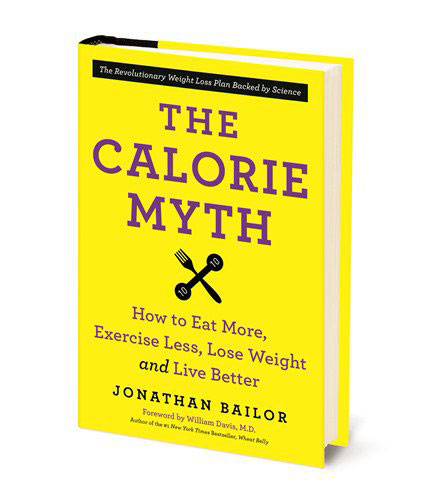
Yeah, we can do our best to implement the recommendations of last week’s guest Jonathan Bailor. But if we are constantly playing victim to our own minds, even our most stalwart attempts to get healthy and lose fat will prove futile.
In this episode, Pete and I cover the following topics:
* How generalizations can be a giant obstacle in losing fat long-term.
* The habits we have that thwart the achievement of our health goals.
* How affirming ourselves in ways other than food consumption can be critical to successful fat loss.
* Why it is important to set ourselves up for wins while on our journeys.
* Pete’s Four Ps of Fat Loss
* The formula for true happiness.
* One of the greatest contributions you can make to the world.
Click the PLAY button below to listen to this life-changing episode of UW Radio.
Another of one of life’s certainties is that there will always be people — sometimes even those who are supposed to support you the most — who will do all they can to keep you down. They go out of their way to sabotage your diet and exercise program. They do all they can to tear you away from your significant other. For some reason, they can’t seem to be happy for you no matter what awesomeness may be occurring in your life.
That’s a hater.
Yet, little do we know that our biggest hater may be, in fact, that three-pound noodle between our ears.
Last night, I decided to pluck one of my favorite books, Life Unlocked: 7 Revolutionary Lessons to Overcome Fear, off the shelf. In it, author Dr. Srini Pillay breaks down the science of fear and why even though we know what we want, we just can’t seem to act on it. We get stuck.
This reminds me of a Facebook status update I posted a couple of months ago, in which I asked my peeps what they would do if they were guaranteed to succeed. The responses were some of the most amazing aspirations I had ever read. Yet, when I later inquired about why they were not pursuing these inspiring endeavors, the almost-unanimous response was fear.
But where does this fear come from?
The human brain is quite the survivalist. Although we have developed higher order functions like speaking, thinking, and, of course, blogging, our brains still possess primitive forces remaining ever-vigilant for signs of danger or threat. It is these latter forces that may lie at the root of what I call the game of start-stop-start-stop-only-to-start-again-and-stop-again when it comes to moving toward our goals.
I detailed my own seven-year battle with the start-and-stop cycle, as it related to completing my e-book, in chapter 10 of The Dark Side of Fat Loss.
In the diet and exercise world, this cycle is rampant. And it may not have anything to do with the program one is following. In fact, it may not have to do with anything within conscious awareness! The source may reside with in the subconscious mind.
Before I go on, I should let you know that what I am about to describe is merely the basics of fear science. If I went any deeper, we’d end up with a really long blog. So, for further reading, I suggest you check out chapter one of Life Unlocked, or at a minimum, listen to THIS INTERVIEW with Dr. Pillay on UW Radio.
At the heart of fear lies an almond-shaped mass of nerve cell bodies, located in the center of the brain, called the amygdala (a-mig-duh-la), a primitive you-better-run-from-that-hungry-lion structure we all inherited from our ancestors. When danger is present, this structure lights up, thus activating our fear circuitry.
To say that the amygdala has an itchy trigger finger would be an understatement. Take for example people who have a condition called cortical blindness, with which there is no damage to the eyes themselves but to the striate cortex, the part of the brain responsible for processing the nerve signals relayed from the eyes. In other words, the eyes work fine, but the brain just can’t make images out of the information, thus the individual can’t “see” anything.
Studies have shown that when photos of people with fearful facial expressions — or other unsettling images such as spiders — are presented to cortically blind subjects, the amygdala fires and the fear circuitry is activated!
Equally mind-blowing is that it only takes a mere 10 millisecond (ms) of exposure to the image for the unconscious brain to register and begin to process the fear source. After just 30 ms, the conscious brain is set into motion.
If the brain can perceive a visually communicated image when the individual is without the ability to see it, just imagine what’s going on within our brains when we are inundated with negative news stories, violent video games, celebrity tabloids, office gossip, jobs we dread, and negative self talk?
So, what does this have to do with your brain being a hater, or why you’ve been playing the start-stop-start-stop game?
Consider the following analogy that I’m totally stealing, almost word-for-word, from Dr. Pillay. (I’m sure he won’t mind.)
Nerve tissue is live tissue that acts just like an electrical cord. When you plug the cord into its power source, current begins to flow. If you plug an electrical cord into a battery, which produces direct current (DC), direct current will run through the cord. If you plug the cord into a wall outlet, which transmits alternating current (AC) from a power plant, alternating current will run through the cord. The nature of the power generated by the source determines how the current flows. (Pillay, 4)
In Pillay’s analogy, the sources are the battery and the power plant, while the resulting currents are DC and AC, respectively.
When it comes to the nerve tissue in our brains, the source is the events of the world. As soon as we are born, we are constantly exposed to events (source inputs), all of which flow into our brains, consciously or unconsciously, regardless of whether we are wide awake, daydreaming, or sound asleep. In other words, the brain is always plugged in. If the events taking place are of a fearsome nature, then a fear current will run through the nerve tissue.
Now, imagine what would happen if we were consciously aware of every single event that took place around us. We would go nuts! There would be way too much to attend to. Yet, although we cannot process it all on a conscious level, the subconscious is still taking it in. Pillay uses the example of a patient who suffered from a case of anxiety that subsided once her husband stopped watching crime shows in bed after she fell asleep. No, she wasn’t watching the shows, but because of them, her fear circuits were firing as she slept.
Now for the hater part. The amygdala is connected to the conscious brain, thus allowing signals to run between it and the more conscious get-the-job-done action centers (the cortex) that we need to move toward our goals, whether they be losing weight, being in a healthy relationship, or making more money. Just as those whom we feel we are most connected to may be our biggest haters, the close connection between the cortex and the amygdala can put our plans of lean bodies, wedding rings, and higher tax brackets on hold.
When fear is present — again, consciously or unconsciously — the amygdala fires up. Pillay writes, “this amygdala activation will spread to the cortex and disrupt the synchrony your brain needs for the cortex to organize your efforts toward the goal.”
Amygdala gotta hate.
I’m running up against my 3-page blog rule. I’ll be back with more tomorrow. But, in the meantime, consider what fears you might have — consciously or unconsciously — about getting healthier and/or losing weight.
Do you worry about what other people — friends and family, in particular — will think of your diet and lifestyle changes?
Do you worry that your significant other, who has gained quite a bit of weight him/herself, will become jealous of the new attention you receive once you achieve your goal?
Or are YOU feeling weary about all of the attention?
Are you scared to death of your next weigh-in and body-fat check with your personal trainer?
As you ponder that for the next day, I challenge you to try just one thing that will surely calm down that overreactive hater in your skull. For the next 24 hours, don’t watch any news, read any newspapers, visit any news sites, play any violent video games, read any gossip mags, or participate in any gossip yourself. Try it for one day and notice how much better you feel.
If there is one thing I have noticed about the Professional Human Beings (PHB) I spend time with, it is that they avoid all of the above, all of the time. And they get stuff done!
Check out the video below regarding this kind of input control with one of my fave PHBs, Todd Durkin.
More on this topic — including some solutions — tomorrow!
There’s a lot more to fat loss than meets the eye.
I’ve sat through many conferences, read hundreds of books, and spoken with countless experts about the causes of and potential solutions for our modern obesity epidemic.
Everyone has their own opinion. Some make sense. Others are overly simplistic — take the calories-in/calories-out fat loss formula, for instance. And most completely miss the point by approaching the topic with extreme tunnel vision.
In my opinion, solving problems usually calls for some lateral thinking, or what I call thinking outside of The Box. In other words, getting to the bottom of obesity requires that the conversation move beyond just diet and exercise alone.
This conversation can go in many directions. We could talk about the effects of sleep deprivation on weight gain, the role of stress in blood sugar dysregulation, or even how infections contribute to insulin resistance and thus fat storage.
But one leading cause of obesity that often gets lost in this ongoing discussion is how the abundance of toxic chemicals in our air, food, water, and even those lurking in your kitchen and bathroom cabinets are making you fat.
It is blatantly obvious that obesity has steadily risen as our food supply has become more processed and refined. I think we can all agree on that. Yet during this same period the number of chemicals in our environment has exploded in lock-step with our waistlines. For instance, in his fascinating-yet-kinda-scary book The Hundred Year Lie, author Randall Fitzgerald states that in a study conducted by the Centers for Disease Control involving 2,400 adults and children, more than two hundred synthetic chemical toxins were found in the subjects’ bodies, with a hundred more chemicals suspected to be present.
The human body was never intended to deal with this kind of chemical assault. In fact, when you think about it, your body is a highly complex machine within which literally thousands of biochemical reactions are taking place at all times. If you’ve ever taken a laboratory course in Chemistry, you know that mixing random chemicals together can be a bad idea. You never know what you’re gonna get!
According to a growing number of research scientists studying obesogens, the chemicals we inhale, eat, drink, and lather ourselves with during and after a shower are making us fat.
When it comes to fat regulation, it’s all about the hormones. Obesogens are chemicals that negatively impact the hormonal system thus triggering weight gain. At times, they are referred to as endocrine disruptors. A common example of an endocrine-disrupting chemical is a plastic bottle that leaches estrogen-mimicking substances into the body. An elevation in estrogen will certainly create the conditions for fat storage, especially in men.
But it doesn’t end with plastics — not even close. Other chemicals with obesegenic effects include bisphenol A (BPA), non-stick (Teflon) coating on cookware, the petrochemicals in common personal care products, and many more.
Bisphenol A (BPA)
BPA can be found in hard, clear plastic containers, on sales receipts, and in the linings of canned goods. It has recently found itself in the news, as research has demonstrated links between BPA and learning disabilities, cancers, and leptin resistance -— the latter being a significant factor in weight gain.
BPA also suppresses the release of adiponectin, a hormone responsible for increasing insulin sensitivity and reducing inflammation. Inhibiting adiponectin contributes to insulin resistance, which, of course, leads to fat storage. As a general rule, when insulin levels are elevated, the body is in fat storage mode.
To minimize BPA exposure be sure that you purchase canned goods that are BPA-free, avoid bottles or containers marked with a number 7, and have the cashier toss the receipt when you don’t need it.
Teflon (PFOA)
Teflon, or PFOA, is commonly found in non-stick cookware, greaseproof food wrappers, waterproofers, and popcorn bags. Research by the Environmental Working Group has found that over 90% of us have PFOA in our bloodstreams. Studies have also found high levels in umbilical cord blood. Yikes!
This chemical has been linked to various cancers, lung and kidney damage, and obesity. If you are cooking your food in non-stick cookware, you are slowly poisoning yourself daily with small amounts of PFOA. Keep this is mind if you are one those people who eats healthy but also eats out a lot. The restaurant chef is most likely using non-stick cookware!
Avoiding PFOA is a matter of investing in a set of cast iron or stainless steel cookware. If making such an investment is not in the cards for your right now, be sure to get rid of any scratched of chipped non-stick items, as they can tremendously increase the amount of PFOA in your food.
Personal Care Products
According to Fitzgerald, we use 9 personal care products daily with around 126 chemical ingredients, one-third of which have been identified as causing cancer or other serious health problems. Ouch!
Just as we should read our food labels, we should also pay mind to the chemicals in these products. No, we don’t eat or drink our shampoo or body wash (at least I hope not), but we must not forget that what we rub on our skin can be absorbed transdermally into our bloodstreams.
Toxic ingredients to be on the lookout for are propylene glycol, methyl paraben, ethyl paraben, and fragrances (because your kiwi shampoo doesn’t really have kiwi in it). These chemicals can have an estrogen mimicking effect, thus shifting hormones, storing fat, and possibly fueling tumor growth.
I encourage you to visit www.cosmeticsdatabase.com to learn just how toxic your personal care products may be. The database ranks products on a scale of 1 to 10, with 10 being the most toxic. I try to keep my products at four and below. Great brands are Aubrey Organic, J/A/S/O/N, and Alba Organics.
We’re just scratching the obesogenic surface! Additional fat-storing toxins include vinyl, most cleaning products, fire retardants (they’re everywhere), chemicals in our water supply, and more.
I cover many of these environmental toxins, how to remove them, and what to replace them with in chapter 9 of my e-book The Dark Side of Fat Loss. CLICK HERE to learn more.
Of course, none of us can live in a bubble. But what we can do is educate ourselves, become more aware of the toxins around us, and replace them with healthier options.
The next time you’re out buying a new bottle of shampoo, skip your usual toxic brand and grab its non-toxic alternative. Or invest in just one stainless steel skillet; you don’t have to buy the whole set!
Remember, a little on top of a little will soon become a lot. By making small changes today, in a matter of months you will have tremendously reduced your toxic load. Not only will feel better and live longer, but you will also burn more fat by normalizing your hormonal system.
It’s definitely not as easy as calorie-in/calories-out. That seldom works from anyone in the long term!
Why? Well, because your body is super smart and wants nothing more than to ensure your survival in times of famine (either real or self-induced).
Since it’s the giving season (isn’t it always?), here’s a section on the forgotten fat loss hormone leptin from my ebook The Dark Side of Fat Loss. The only thing you’re missing are the really cool graphics that go with the text.
If you’re not much of a reader, you can watch the video instead.
Enjoy!
Chapter 2: It’s All About the Hormones
The Dark Side knows that dieting makes you fat.
It knows that every time you go on a diet, you end up heavier than you were when you started. This is no coincidence. It’s just basic human physiology with a dash of logic.
Your weight gain is not a simple matter of overindulgence and indolence, but of survival and miscommunication. You are NOT a gluttonous sloth with a predisposition for stuffing your face all hours of the day while planted firmly on your backside. There is a perfectly good answer as to WHY you eat too much and move too little. It’s just that no one bothered to tell you until now.
The answer is not one of psychological defect — you just want to be fat — or thermodynamics, but of hormonal imbalance.
Getting All Hormonal
Hormones are the chemical messengers that tell your cells what do. Since your body is made up of 50-75 trillion of these cells, you certainly want to be sure that they get the right messages and do the right things. Your health depends upon it.
Hormones do it all. They are what make you a man or woman. They put you to bed at night and wake you in the morning. They govern your heart rate and blood pressure. They calm down your anxieties and relieve depression. They help you digest your meals. They control your sex drive. They fight stress and infections. They regulate your blood sugar. And they are also responsible for the burning and storage of fat. Any and all attempts to lose fat without first restoring the proper function of the fat-burning and fat-storing hormones will be in vain. Hunger and hardwiring trump willpower every time.
Many volumes and literally hundreds of thousands of pages have been written on how hormones impact human physiology, function, and fat storage. In fact, the human body contains more than 100 different hormones. This stuff can get pretty darn complicated! So in this chapter, we will cover the basics. If you wish to go deeper down the hormonal rabbit hole, please refer to the recommended materials and scientific references at the end of this chapter to further your understanding.
While we’ll keep it rather simple here, I guarantee these fairly basic concepts will go well above and beyond anything you’ve ever heard or read before regarding how your body burns and stores fat. I even recommend you break out a pencil and paper for note-taking. As you take notes you’ll likely end up with a messy sheet of paper with arrows pointing from each hormone to several others, demonstrating their interdependency. This hormonal interplay exemplifies the extraordinary balancing act your endocrine (hormonal) system must perform in order to keep your body’s fat burning furnace fired up.
The interdependency among hormones is both a gift and a curse. Like dominoes, when one hormone falls out of balance, others soon follow. Imbalances can be a matter of excess or deficiency. In other words, you don’t want too much of a hormone and you don’t want too little.
To illustrate this concept of too much or too little, let’s consider the amount of water you drink. If you drink too little, you become dehydrated and your body begins to shut down. If you drink too much, you can throw off your electrolyte balance – a condition called hyponatremia – and end up in the ER. Neither situation will lead anyone to believe that water is bad for us. The problem resides in its excess or deficiency.
In the same regard, too much or too little of a hormone can cause serious health problems. For example, too much thyroid hormone — called hyperthyroidism — may give you heart palpitations, cause chronic anxiety, and keep you awake all hours of the night. Conversely, not enough of the same hormone — called hypothyroidism — will cause you to gain weight, make your hair fall out, and have you feeling frostbitten on a warm sunny day.
If you are a woman (pro female bodybuilders, for instance), too much testosterone might give you an Adam’s apple and a Tom Selleck mustache. Too little will pull your libido right out from under you and keep you from burning fat and building muscle.
Instead of too much or too little, you want just enough. In the pages that follow I will show you how your body employs hormones — primarily leptin and insulin — to ensure that you have just enough bodyfat and blood sugar. Once these vital hormones lose their way, the result is an internal environment that is highly conducive for a
reduction in metabolism, increase in appetite, sedentary behavior, and storage of fat.
Your weight gain is what I like to call survival gone haywire. To understand this concept, we have to go back.
Way back.
Going Caveman
How easily we forget that regardless of how modern and high-tech things may seem, you and I are still living in prehistoric bodies. If you’ve ever seen the movie Encino Man, Sean Astin stumbles upon a caveman in his backyard frozen in a block of ice. He and his best friend thaw the Neanderthal out, clean him up, give him a wicked haircut, and end up with Brendan Fraser!
Yeah, I know it’s just a movie (it’s actually pretty funny), but it makes some great points. From a physiological perspective, cave people were really no different from us. Give them an afternoon with the Extreme Makeover team and I bet you wouldn’t recognize them on the streets.
We are cave people! What separates us most from our prehistoric ancestors is our environment. Caveman never imagined that there would be a such thing as a supermarket, that we could turn darkness into daylight, and that the famine would never come. He didn’t have a refrigerator or freezer. No free samples at Costco. No media telling him how he ought
to look or dress. In fact, the only way he knew what he looked like was by catching his reflection in a stream or puddle.
Mirrors and media were the last thing on caveman’s mind. He had more important matters to deal with, like finding his next meal while not becoming one. Survival was the
name of the game. Lucky for him, he had a few built-in mechanisms to ensure that he lived to see another day. And it is these very same mechanisms that have been working against you in your many failed attempts to starve and strain yourself to fat (err, weight) loss.
Fat: It’s Alive!
Caveman never cut calories on purpose. He never caught a glimpse of his reflection and decided it was about time he go on a diet. In fact, going on a diet would have been caveman crazy talk, especially when he wasn’t always sure where his next meal was coming from. Some days there would be plenty of food to go around. Other times the primordial fridge was empty. Since starving was just as uncool back then as it is today, the body had to possess some kind of starvation defense system. If not, you and I wouldn’t be here. The first winter famine would have been the end of us all.
As bizarre as it might sound, your fat stores are that very defense system protecting you from the perils of famine and death. You may think of your fat as just an unsightly energy storage depot. But it has recently been discovered to be an actual hormone-producing organ just like your thyroid, adrenals, and pancreas. Yes, fat is an organ!
Discovered in 1994, leptin is a hormone secreted by your white adipose tissue, otherwise known as the unwanted fat collecting on your butt, thighs, and abdomen. And it’s not just any hormone. Leptin is the master hormone, charged with the crucial role of keeping you from starving to death by monitoring how much fat you have on board. That way, when the famine comes you can live off of your fat stores until it’s time to eat. If the famine arrives and you’ve got just four-percent bodyfat, you’re in big trouble, my friend!
Leptin is in direct communication with a gland in your brain called the hypothalamus. When your fat stores are sufficient, your hypothalamus gets a phone call from leptin saying all is well and that making it through a food shortage won’t be a problem. As a result, the hypothalamus keeps your metabolism humming along and your appetite at bay since there is no need to store any additional fat.
How Diets Make You Fat
What’s important to mention here is that the starvation defense system is under subconscious control. Your brain has no idea what you look like in the mirror. Nor does it care what or who you want to look like. All it cares about is your survival by way of ensuring that you have enough fat on hand to make it through the famine that never comes.
So when our caveman—we’ll call him Link, like the movie character—was short on food, his body shifted to his fat stores for fuel. As his fat stores shrank over the scarce weeks or months, they produced less leptin. And since there was less leptin, the phone call being made to the hypothalamus was of an urgent nature. Fat stores down! Fat stores down! Mayday! Mayday!
When fat stores are on their way down, the last thing your body wants is a turbo-charged metabolism. In terms of survival, that would be pretty boneheaded, since a hot metabolism
would only serve to burn through your fat stores at a blistering pace, thus expediting your impending doom.
So when the hypothalamus gets word that Link’s fat stores are dwindling, it does a couple of really smart things. First, it tells the thyroid gland—the metabolic control center located in the throat—to turn down his metabolism. This metabolic slowdown is an ingenious survival tactic that preserves fat while matching the limited supply of food. That way Link won’t run out of fat before the famine breaks. Second, the hypothalamus increases his appetite (more on this below) so he’ll be super-motivated to go looking for food to replenish his fat stores. In other words, his body responds to the prolonged food shortage by slowing his metabolism and making him hungry.
Wait a minute!! Isn’t a low-calorie diet pretty much the same as a food shortage? Could leptin be the reason WHY you can’t stick to your diet and exercise program without hitting a plateau—because your metabolism slowed—or eventually getting your daily Thanksgiving on (a reference to the last chapter, for those of you reading this on my blog) — due to increased appetite — like the poor lady in the previous chapter? Remember, calories-in and calories-out are Siamese twins. You can’t fiddle with one without affecting the other. Leptin is the glue that binds the two.
By the way, will someone please tell me why a caveman would go running during a famine? Because that’s exactly what The Box has been telling you to do to “lose weight”. It really makes no sense at all when you think about it.
Why You Gain It All Back…And Then Some
When the famine breaks and Link gets his mitts on some venison and wild berries, you better believe that those calories are going straight to his fat stores. As his stores are replenished, his leptin will rise and his brain will get a phone call from his fat cells saying that everything is cool. Link’s metabolism and appetite will normalize. The famine will come again and he will be well prepared.
This is why 95% of dieters regain all of their lost weight. They simply can’t outsmart leptin. The two main conditions that set off your starvation defense system are reduced fat stores and caloric restriction (cutting calories). As you go on and off of diets, time after time, again and again, your body starts to smell a diet coming from a hundred miles away. So when you eventually pack the fat back on, it stows away a little extra for added insurance. After every diet, you end up heavier than you were when you started. This is how diets make you fatter!
Leptin Resistance: A Failure to Communicate
Your survival defense system works both ways. It doesn’t want you too skinny, nor does it want you too fat. Your subconscious mind is well aware of the fact that a portly version of you would have a hard time running from a saber tooth tiger. So it wants to keep you lean enough to fight-or-flee and fat enough to survive a famine. It prefers just enough fat.
Let’s consider what happens when a guy like me actually puts on a few pounds from having a few too many servings of birthday cake, late night cervezas, and one-and-a-half almonds. If my fat cells and hypothalamus are communicating optimally, my brain will sense the extra leptin — from my extra fat stores — and once again do two very intelligent things: it will turn up my metabolism to bring my fat stores down to where my subconscious likes them to be, and it will turn down my appetite to keep me from packing on more fat.
The human body is friggin’ smart! This is why the Dark Side doesn’t count calories. When leptin and the other hormones you’ll be meeting soon are in balance, appetite and calories just tend to take care of themselves.
I know exactly what you’re thinking. Wouldn’t overweight and obese people make a ton of metabolism-increasing, appetite-reducing leptin due to such superfluous fat stores? And if so, why don’t their bodies protect them from that same saber-tooth tiger?
Great questions! Yes, people with excess fat stores are pumping out plenty of leptin, which should relay a message to the hypothalamus that there is way more than enough fat on board. Metabolism should crank up to burn off the excess fat. Appetite should calm down as well. But they don’t. Why? Because the hypothalamus has become leptin resistant. In other words, leptin is making the call, but the brain doesn’t hear it. The darn ringer is off!
When the brain becomes leptin resistant, the subconscious mind is completely oblivious to the fact that there is way more than enough fat on hand to get through the famine. It thinks it’s dealing with a rail-thin supermodel with extremely low fat stores and leptin levels, not the overweight guy or gal trying to sweat off the pounds in Zumba class. So the brain sends out the command to slow down the metabolism and increase hunger. No bueno!
How did things get this out of hand? Leptin resistance has been attributed to overeating (not so uncommon these days), frequent blood sugar surges (from our Standard American Diet), high triglycerides (ditto), excessive fructose consumption (the stuff is in everything!), and chronic stress (got some?).
Down Go the Dominoes!!
Here is where the hormonal interplay comes into the picture. When leptin levels are low (or the brain thinks they are low because of leptin resistance), the stress hormone cortisol goes through the roof. This presents quite a problem since cortisol is a fat-storing and muscle-wasting hormone. We’ll discuss the evils of excess cortisol in Chapter 6.
Reduced leptin levels also triggers an increase in a little-known appetite-regulating hormone in your stomach called ghrelin. When ghrelin is up, so too is your appetite and food intake. And to make you even more motivated to pay a visit to a vending machine near you, Neuropeptide Y (NPY)—a hunger signal produced by your brain—surges when leptin is down. NPY drives you to crave carbohydrates. And I’m not talking about broccoli and cauliflower; I’m talking about the sweet stuff that drives up your insulin levels. And as you’ll soon learn, insulin stores fat!
Please keep in mind that your actual leptin levels don’t have to be low for this hunger-inducing, fat-storing cascade to take place. If leptin and the hypothalamus are in a state of miscommunication (leptin resistance), leptin may be sky high, but the brain is deaf, dumb, and blind to it.
Now would be a good time to think back to the question posed by Taubes in the previous chapter, “WHY do you overeat?” I hope the last few paragraphs shined a little dark on that.
Again, your body would rather you not starve to death. And that’s exactly what it’s thinking when you cut your calories in an attempt to lose weight.
You can’t cheat the system. It’s way smarter than you.
Click HERE to order your copy of The Dark Side of Fat Loss!!
So, last night I burned through the first half of Wheat Belly while half-watching the Philadelphia Eagles blow yet another game.
While reading, I figured that I should probably make a video about how wheat makes us fat and is actually worse (from a blood sugar perspective) than consuming sugar.
Kinda ironic when we’ve been told to ditch the simple sugars (table sugar, for example) for more complex carbohydrates (wheat!).
This ridiculous dietary recommendation has only served to create more obesity, diabetes, heart disease, and more.
Check out the video below, as I drop truth bombs about how wheat makes you fat!
To learn more, pick up the book Wheat Belly by Dr. William Davis.
While you’re at it, listen to my podcast with Dr Davis HERE.
Join us for a LIVE question-and-answer session with our Day 1 SexyBack Summit presenters, including:
* Dr. Sara Gottfried - 50 Shades of Better Sex: Secrets of a Harvard Gynecologist
* Alisa Vitti - How to Cross Train Your Menstrual Cycle for Better Sex
* Adam Gilad - Embracing And Communicating Your Sexuality...
* Brett Klika - Exercise and Sex: The Good, The Bad, The Ugly
Register to attend this FREE weeklong online event at www.sexybacksummit.com.